Sports Betting · Guide
US Sports Betting Map
A plain guide to which states allow sports betting, how online and in-person rules differ, and where to confirm your own state's status.

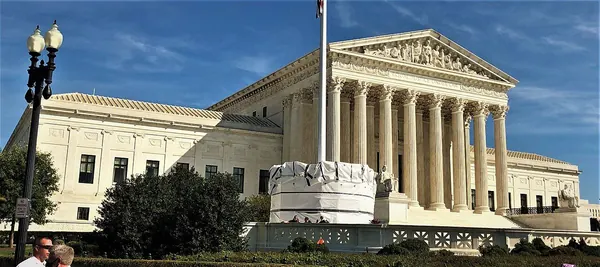
Photograph by Baishampayan Ghose via Wikimedia Commons (CC BY-SA 2.0)
Sports betting is legal in most of the United States, but not everywhere: as of 2026, the American Gaming Association counts 39 states plus Washington, D.C., with live, legal sports betting. It became a state-by-state policy decision after the Supreme Court struck down an old federal limit in a 2018 ruling.
Sports Betting Became a State-by-State Question
Until 2018, a federal law called PASPA, the Professional and Amateur Sports Protection Act of 1992, made it unlawful for a state to "sponsor, operate, advertise, promote, license, or authorize" sports gambling schemes. Nevada was the only state with legal sports betting in casinos, and a few other states kept limited sports lotteries or pools under grandfather provisions.
But in Murphy v. NCAA in May 2018, the Supreme Court held PASPA unconstitutional. By a 6-3 vote, the justices ruled that the law violated the anticommandeering principle rooted in the Tenth Amendment, because it dictated what state legislatures may and may not do.
Notably, the Supreme Court decision did not change the gambling laws in any state, and contrary to some expectations, it did not legalize sports betting nationwide. Instead, each state was given the choice to regulate sports gambling, and no state is obligated to adopt it. The result has been substantial spread across state laws.
What "Legal" Means in Practice
Most states that allow sports betting have legalized full online sports betting. These states treat it like most online transactions: fans can open an account, deposit money digitally, and place bets on their phones. Online wagering is tied to where the bettor is physically located when the bet is placed, not where the bettor lives, so an app that works in one state can be blocked across the border.
A smaller group restricts sports betting to physical locations. As of 2026, states such as Nebraska and New Mexico allow wagering only in person, and Mississippi allows app betting only on casino premises. In these states, bettors have to visit a casino, racetrack or other licensed venue, much as they would to play a table game.
States Without It and How to Check Yours
As of 2026, 11 states have no legal sports betting: Alabama, Alaska, California, Georgia, Hawaii, Idaho, Minnesota, Oklahoma, South Carolina, Texas and Utah. In California, voters rejected both sports-betting measures on the November 2022 ballot: Proposition 26, which would have allowed in-person betting at tribal casinos and licensed racetracks, and Proposition 27, which would have allowed online betting. Utah's constitution bars the legislature from authorizing games of chance, and Hawaii has no legal commercial gambling at all.
Because the map changes as legislatures act, the reliable check is your own state's gambling regulator, such as a gaming commission, gaming control board or state lottery. These agencies publish the list of sportsbooks licensed to take bets in the state; national maps are a useful starting point, but the regulator's list is the one that counts. If you are unsure about your own state, a local attorney familiar with state law can answer the question. This article is general information, not legal advice.
Sports gambling carries risks, and the National Council on Problem Gambling lists free, confidential help at ncpgambling.org. While the 2018 Supreme Court decision ended a federal ban on state-authorized sports gambling, each state still decides if, and how, it will legalize sports betting.
This article is general information about the law as it stood at the time of writing, not legal or tax advice. Rules change; check the official source before you act.