Sports Betting · Explainer
Murphy v. NCAA
How a New Jersey challenge to a 1992 federal law reached the Supreme Court and handed sports betting decisions back to the states.
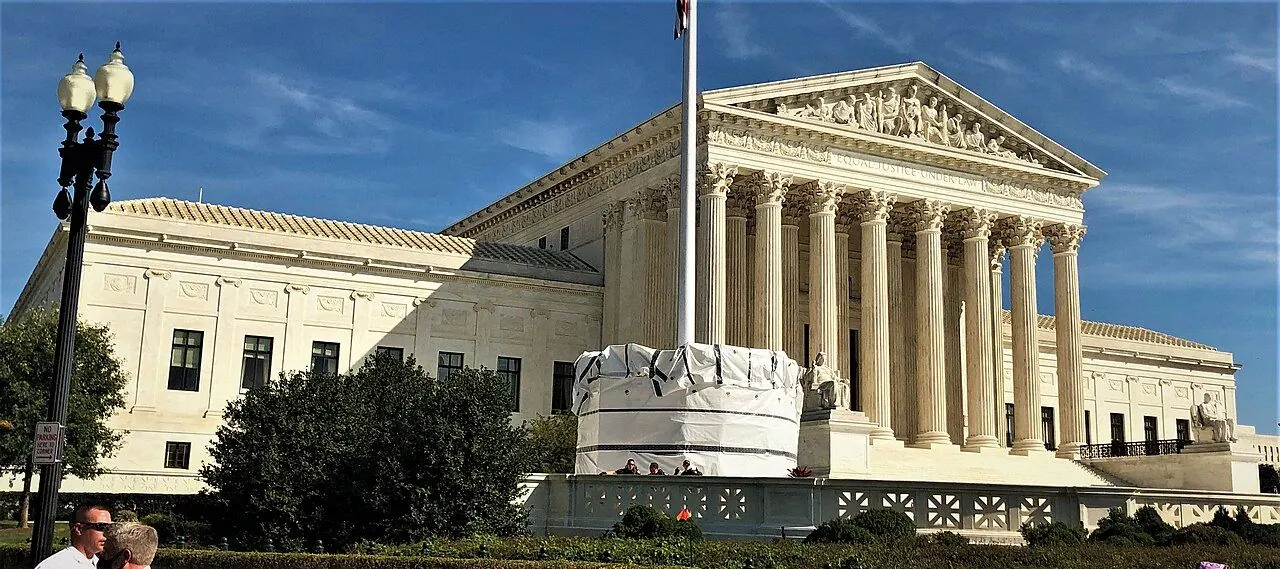
Photograph by Beyond My Ken via Wikimedia Commons (CC BY-SA 4.0)
Murphy v. NCAA is the 2018 Supreme Court case that struck down the federal ban on state-authorized sports betting. The 6-3 decision, written by Justice Samuel Alito and issued on May 14, 2018, did not legalize betting nationwide; it left the choice to each state.
PASPA and New Jersey's Challenge
Since 1992, the Professional and Amateur Sports Protection Act (PASPA) had prohibited most states from authorizing sports betting. PASPA made it unlawful for a state "to sponsor, operate, advertise, promote, license, or authorize by law or compact ... a lottery, sweepstakes, or other betting, gambling, or wagering scheme" based on competitive sporting events. It did not make sports gambling itself a federal crime; instead, it let the U.S. Attorney General and sports organizations sue to stop violations. Grandfather provisions let existing forms of sports gambling continue in four states, including Nevada.
New Jersey was the state that openly challenged PASPA. After voters approved an amendment to the state constitution, the legislature enacted a 2012 law authorizing sports betting at Atlantic City casinos and horse racetracks. The NCAA and three major professional sports leagues sued, and federal courts blocked the law. In 2014, New Jersey tried again with a narrower law that repealed its own prohibitions on sports betting at casinos and racetracks for people 21 and older, excluding bets on New Jersey college teams. The leagues won again in the lower courts, and New Jersey took the case to the Supreme Court.
New Jersey argued that PASPA violated the anticommandeering rule, which bars Congress from issuing direct orders to state governments. The rule reflects the constitutional structure under which powers not given to Congress are reserved for the states.
The Supreme Court's Ruling
When the case reached the Supreme Court, New Jersey won. In a 6-3 ruling, the Court first held that repealing old bans, in whole or in part, counts as "authorizing" sports gambling under PASPA. It then held that PASPA's prohibition on states authorizing sports betting violated the anticommandeering rule. Justice Alito was joined by Chief Justice Roberts and Justices Kennedy, Thomas, Kagan and Gorsuch, with Justice Breyer joining most of the opinion. Justice Ginsburg dissented, joined by Justice Sotomayor and, in part, by Justice Breyer.
The Court wrote that the provision "unequivocally dictates what a state legislature may and may not do," putting state legislatures "under the direct control of Congress." It rejected the argument that PASPA was a valid form of federal preemption, because preemption works through rules for private actors, not commands to states. The Court also held that no provision of PASPA could be severed from the invalid one, so the whole law fell.
What the Ruling Did Not Do
Though the historic ruling opened the door for states to legalize sports betting if and as they chose, it did not create or legalize gambling nationwide. In the Court's words, "The legalization of sports gambling requires an important policy choice, but the choice is not ours to make. Congress can regulate sports gambling directly, but if it elects not to do so, each State is free to act on its own."
States moved quickly. Delaware expanded to full-scale sports betting on June 5, 2018, and New Jersey's governor signed a sports wagering law on June 11, 2018, with the first legal bets taken at Monmouth Park three days later. As of 2026, the American Gaming Association counts 39 states plus Washington, D.C., with live, legal sports betting, while other states, including California and Texas, have not legalized it.
The practical takeaway: Murphy removed one federal barrier and sent sports betting policy back to state legislatures and voters. Whether betting is legal where you are depends on your state's law, so check your state's gaming regulator for current rules. This article is general information, not legal advice.
This article is general information about the law as it stood at the time of writing, not legal or tax advice. Rules change; check the official source before you act.